
Skanda Purāṇa
Skanda Purāṇa, “the Purāṇa told by Skanda”
The Skanda Purāṇa is the largest and arguably the most geographically and devotionally detailed of the eighteen Mahā Purāṇas. This immense scripture is dedicated to the glory of Skanda (also known as Kārtikeya, Murugan, Subrahmaṇya, or Kumāra), the commander of the armies of the devas and son of Bhagavān Śiva. However, the Purāṇa’s scope transcends its nominal deity, serving as a vast, unparalleled encyclopedia of Tīrtha Māhātmya (the sacred geography and glory of pilgrimage sites) across the entire Indian subcontinent. It is a fundamental text for the Śaiva tradition, meticulously detailing the accounts and sanctity of virtually every major temple, river, and mountain in India. To navigate the Skanda Purāṇa is to undertake a comprehensive, spiritual pilgrimage to the very heart of Sanātana Dharma.
Significance
The significance of the Skanda Purāṇa lies in its unique role as the Tīrtha Kośa (Treasury of Pilgrimage). It provides exhaustive accounts of the narratives and rituals associated with hundreds of holy spots, linking them directly to cosmic events and the lives of ṛshis and devas.
- Monumental Size: It is the longest of all the Mahā Purāṇas, traditionally cited as containing eighty-one thousand verses (ślokas). This vastness reflects the depth of its sacred geography and its narratives.
- Śaiva Authority: It is a prime authority for the Śaiva tradition, providing detailed descriptions of Śiva’s Līlās, the significance of the Liṅga form, and the glory of Umā (Pārvatī).
- Narrative Variety: Due to its size and scope, the text holds many local Māhātmyas (glorification texts), woven together into a single, cohesive narrative of Śaiva and Śākta devotional life.
The Matsya Purāṇa defines its importance:
skāndaṃ tu śata sāhasraṃ yatra māhātmyaṃ kṛtaṃ munibhiḥ ।
tārkasya ca narasya ca skāndaṃ tat parikīrtitam ॥That Purāṇa which consists of one hundred thousand verses, wherein the munis recount the glory of Tāraka and the human race, is known as the Skanda.
Note: The number of verses varies across traditional sources.
Per Agni Purāṇa, the Skanda Purāṇa has 84,000 ślokas, the largest number Pushkara gives for any Purāṇa. Kumārasvāmī (Skanda) told this Purāṇa, the account of the Tatpurusha Kalpa, on the basis of the Śaiva teaching (Śaiva-mata). It too is given in dāna in the month of Caitra (Agni Purāṇa, Chapter 272).
Narrator and Audience
The narrative framework of the Skanda Purāṇa is highly dynamic, often shifting narrators and audiences to cover its vast subject matter:
- The Prime Narrator: The text is named after Skanda, the son of Śiva, who is often the ultimate source of the teaching, though he rarely speaks directly in the Purāṇa.
- The Sūta-Ṛshi Frame: The general frame is the familiar dialogue between Sūta Romaharshaṇa and the ṛshis at Naimishāraṇya.
- Nested Dialogues: The content is delivered through highly specific nested dialogues, such as Brahma speaking to Nārada, Pārvatī speaking to Skanda, or Agastya speaking to Sūta, ensuring that the authority of the narrative remains supreme.
Structure
The Skanda Purāṇa’s enormous body of work is most systematically organized into seven major Khaṇḍas (Sections), which are primarily based on geographical locations and the Liṅgas worshipped there:
- Māheśvara Khaṇḍa: Glory of Śiva and the sacred Kedāra region.
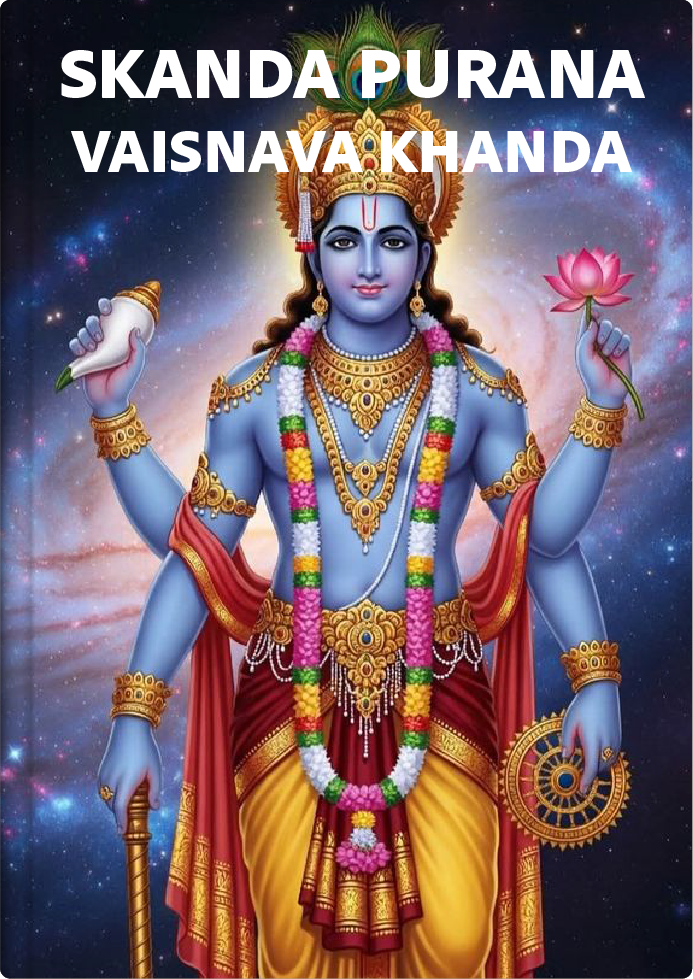
- Vaishṇava Khaṇḍa: Glorification of Vishṇu and regions like Jagannātha Purī.
- Brahma Khaṇḍa: Accounts from the Pushkara and Badrināth regions.
- Kāśī Khaṇḍa: Exclusive glory of Vārāṇasī (Kāśī) and its surrounding Tīrthas.
- Avantī Khaṇḍa: Glory of Ujjain (Avantī) and the Mahākāleśvara Jyotirliṅga.
- Nāgara Khaṇḍa: Accounts from the Nāgara region (modern Gujarat), focusing on the story of the Nāgara Brāhmaṇas.
- Prabhāsa Khaṇḍa: Accounts associated with Somnāth and the western coast of India, particularly the end of the Yādava dynasty.
Contents
The Central Deity: Skanda and the Slaying of Tāraka
The Purāṇa begins by recounting the circumstances of Skanda’s birth. The universe was tormented by the powerful Asura Tārakāsura, who could only be killed by the son of Bhagavān Śiva. The text details the intense tapas of Devī Pārvatī, the burning of Kāmadeva, and the subsequent, miraculous birth of Skanda. His swift victory over Tāraka is celebrated, establishing him as the commander of the armies of the devas and the destroyer of adharma.
The Kāśī Khaṇḍa: The Heart of Śaivism
This section is perhaps the most famous and widely read portion of the Purāṇa. It is dedicated entirely to the glory of Vārāṇasī (Kāśī), the city of Bhagavān Śiva.
- Avimukta Kshetra: It describes Kāśī as the Avimukta Kshetra—the place Bhagavān Śiva never leaves—and details the spiritual significance of dying there, ensuring Moksha.
- The Pañcakrośī Yātrā: It meticulously describes the sacred Pañcakrośī pilgrimage route around the city, detailing the numerous Liṅgas and shrines encountered.
The Vaishṇava Synthesis
Although a Śaiva text, the Skanda Purāṇa includes the Vaishṇava Khaṇḍa, providing extensive Māhātmya for sites sacred to Vishṇu. Most notable are the sections on:
- Purushottama Kshetra: The glory of Jagannātha Purī (Orissa), detailing the temple, the Ratha Yātrā, and the various Līlās of Bhagavān Jagannātha.
- Badarikāśrama: The sanctity of Badrināth in the Himālayas, the abode of Nara and Nārāyaṇa.
The Sapta Khaṇḍa Geography
Each major Khaṇḍa acts as a focused regional Māhātmya, covering specific regions with intense detail:
- Māheśvara Khaṇḍa focuses on Kedārnāth (Uttarakhand).
- Avantī Khaṇḍa details the sanctity of the Mahākāleśvara Jyotirliṅga in Ujjain.
- Prabhāsa Khaṇḍa narrates the account of Somnāth and the destruction of the Yādava clan.
Phala Śruti (Fruits of Recitation)
Given its focus on Tīrthas, the Phala Śruti of the Skanda Purāṇa emphasizes the merit of pilgrimage achieved through devotion and listening.
- Merit of Tīrtha Yātrā: Listening to any part of this Purāṇa is considered equivalent to physically visiting and bathing in all the holy rivers and temples it describes, leading to instant purification.
- Destruction of Pāpas: The recitation of the various Māhātmyas destroys the gravest pāpas (wrongdoings), including those of sacrilege and theft.
- Spiritual Triumph: Worship of Skanda, whose exploits are detailed here, grants the devotee courage, wisdom (Jñāna), and the ability to conquer the inner enemies (vṛttis), leading to the final attainment of Śiva Loka (Kailāsa).
Its place among the Purāṇas
The Skanda Purāṇa is unique in the Purāṇic canon:
- Master of Geography: It is unrivaled in its devotion to sacred geography. While the Padma Purāṇa focuses on major rivers, the Skanda covers thousands of specific local temples and tanks (Kuṇḍas), making it the great treasury of tīrtha-yātrā (pilgrimage).
- Śaiva and Vaishṇava Inclusion: While primarily Śaiva, the inclusion of an entire Vaishṇava Khaṇḍa and the detailed glory of Jagannātha Purī shows a remarkable breadth of devotion, setting it apart from the more strictly Śaiva Liṅga or Vāyu Purāṇas.
- Structure and Composition: Its sectional structure (seven Khaṇḍas) and its nature as a collection of diverse Māhātmyas distinguish it from the structurally unified Vishṇu Purāṇa or the philosophically focused Bhāgavata Purāṇa. It is a vast treasury of local traditions and temple accounts.
Read Skanda Purāṇa Online
Sources
- Matsya Purāṇa (the verse on the Skanda Purāṇa)
- Agni Purāṇa, Chapter 272